The practical answer.
An OCV decrease is a reason to investigate, not a standalone diagnosis. Compare the same cell identity, preparation, rest interval, temperature and measurement system before interpreting drift as abnormal self-discharge. Preserve individual histories and use an agreed screening method. A fixed voltage loss cannot be converted into a universal charge-loss rate without the relevant chemistry and voltage-versus-charge relationship.
- Record time and temperature alongside every OCV observation.
- A fresh post-charge reading and a rested reading are different conditions.
- Use a known reference population and approved limits, not a generic internet millivolt threshold.
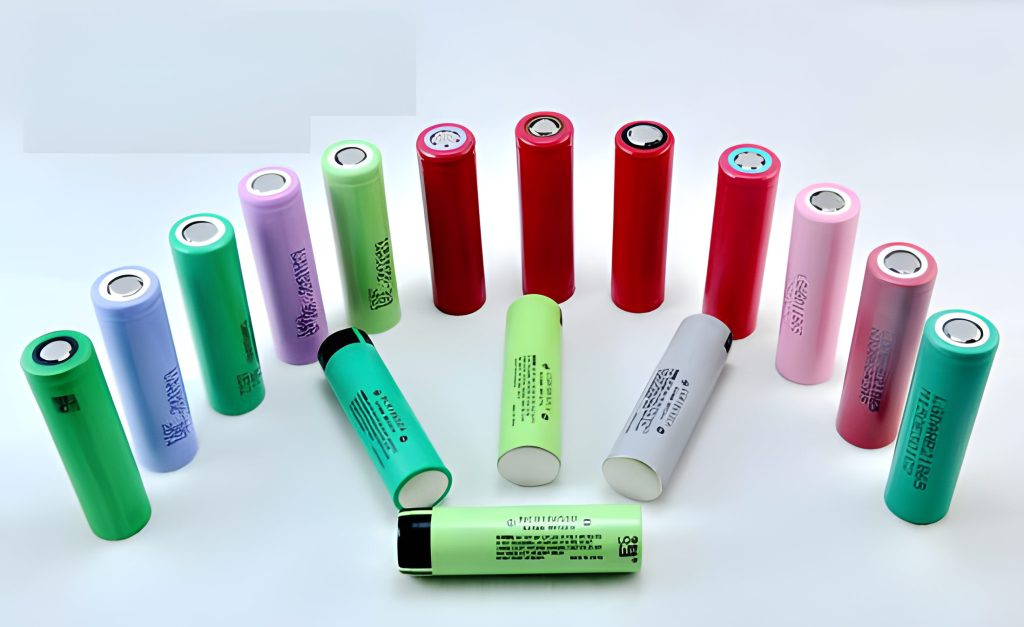
Reconstruct the history behind the two voltage readings
A report often begins with two numbers and an accusation: voltage was higher on arrival and lower a week later, so the lot must be defective. Start by finding out whether the same identified cells were measured with the same instrument and fixture. Then identify their electrical and temperature history. A comparison between different trays, one recently conditioned and one taken from cool storage, does not isolate self-discharge.
Preserve raw timestamps and individual identifiers. If the original sheet records only a carton average, acknowledge that it cannot reveal which items changed. Do not reconstruct missing per-cell histories by assigning a later value to an earlier row. The purpose of the investigation is to reduce uncertainty, not to make an incomplete record appear more detailed than it was.
Distinguish relaxation from the quantity you want to measure
Keysight describes delta-OCV as an indirect observation of voltage loss over an interval and distinguishes it from a potentiostatic self-discharge method. Its application discussion also identifies cell equilibration and stable environmental conditions as important. These distinctions explain why two voltage readings may not directly represent charge lost. They do not establish a faster universal screening recipe or a numerical limit for Jetray catalogue products.
Ask the test owner to define when the observation interval begins. If a cell is still relaxing after an approved charge or discharge sequence, its subsequent voltage change includes that response. The required rest is method- and product-specific. Use the controlled procedure or seek supplier agreement rather than inventing a fixed number of minutes that is applied to every cell chemistry and state.
| Variable | Record | Why the comparison can fail |
|---|---|---|
| Identity | Same individual or clearly defined sample population | Different cells masquerade as a time series |
| Preparation | Last charge/discharge and rest method | Relaxation is included in the observed change |
| Temperature | Cell environment at both observations | Environmental change contaminates a small signal |
| Measurement | Instrument, fixture and checking result | Offset or contact variation resembles drift |
| Method | Interval and approved limit | An arbitrary threshold has no release basis |
Calculate the observed rate without claiming a charge-loss rate
Suppose an invented training record shows 3.310 V at the first observation and 3.306 V after forty-eight hours. The observed difference is 4 mV and the arithmetic average is about 0.083 mV per hour. That describes the voltage record only. It does not say that a certain number of milliamp-hours disappeared, and it is not a measured result from a Jetray cell. A different temperature or unresolved instrument offset may be material to such a small difference.
Converting voltage loss into charge loss requires the appropriate relationship at the relevant state and temperature, plus an uncertainty assessment. Where the voltage curve is relatively flat, a small voltage difference can be a particularly weak basis for a charge estimate. Do not apply a generic lithium-ion curve to the 32140 or 4680 LiFePO4 references. Their model-specific information and the actual measurement conditions must control the interpretation.
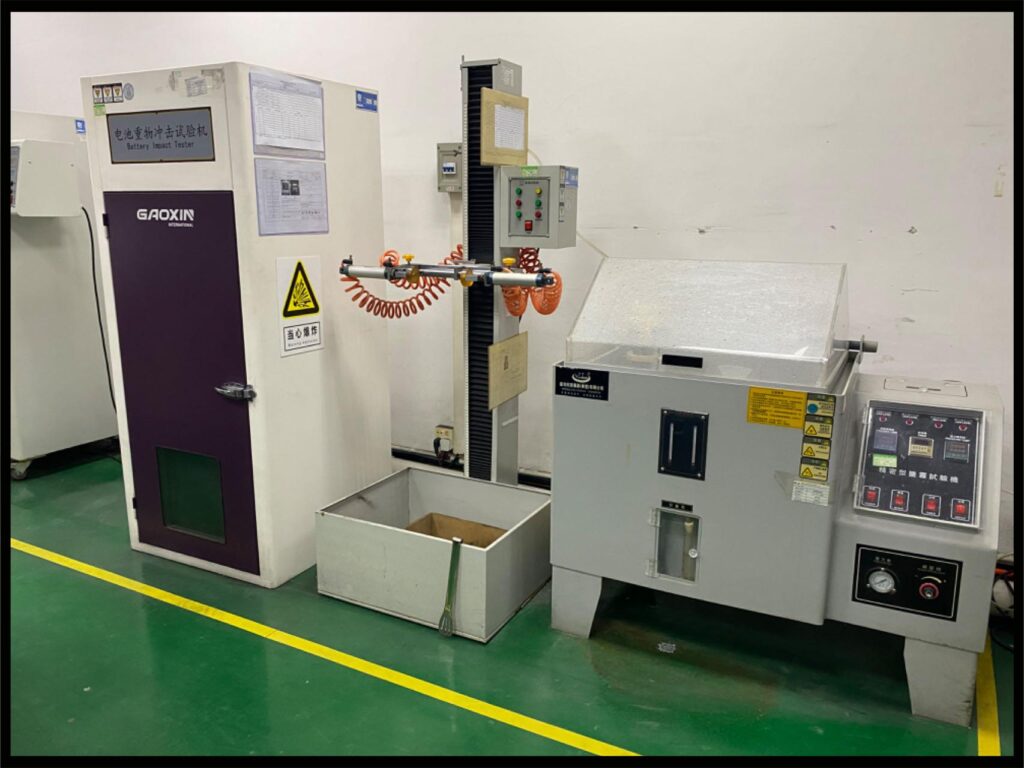
Use a repeat plan that can separate likely causes
Hold the identified sample set and agree a controlled repeat with the supplier. Keep suspect and comparison samples under matched approved conditions, while retaining all original data. Check the measurement system before and after the sequence. Compare the trajectories, not only a final average. If all readings move together after an environmental change, investigate that common influence before assigning individual cell defects.
Avoid testing repeatedly until the outcome becomes convenient. Define the repeat purpose, decision rule and approver in advance. If the observation remains ambiguous, report an unresolved hold and the additional evidence needed. A specialist direct-current self-discharge method may be appropriate for some investigations, but its suitability, settling criteria and product limits require a competent measurement plan; it is not automatically interchangeable with a warehouse OCV check.
- Confirm the original identifiers, timestamps and measurement points.
- Recover preparation and environmental history without filling gaps with assumptions.
- Check the measurement system and preserve the original values.
- Agree a matched-condition repeat and comparison population.
- Assess uncertainty and product-specific criteria with the supplier.
- Release, reject or retain the hold through a documented decision.
Keep the commercial decision separate from the diagnosis
A buyer may have enough evidence to place material on hold before there is enough evidence to identify a failure mechanism. That is a valid distinction. State whether the issue is a documentation discrepancy, a result outside an agreed criterion or an unexplained change requiring engineering review. Avoid labeling an entire supplier lot defective simply because a preliminary trend looks unusual.
For a Jetray inquiry involving the 4680 and CBAK 32140 references, request the actual supplied model, approved conditioning method, traceability and proposed response to outliers. A catalogue brand description does not establish manufacturer authorization or a particular self-discharge grade. The final order record should make clear what was measured, which population was covered and what remains unverified.
Frequently asked questions
Is a universal millivolt-per-day rejection limit meaningful?
Not without the product, preparation, environment, interval and measurement uncertainty. Use an agreed method and criterion for the supplied model.
Can one OCV reading authenticate a cell?
No. It is one electrical observation and cannot replace the source and identity evidence needed for procurement.
Should we erase the first result after a controlled retest?
No. Keep both results, the reason for repeating the test and the final disposition. This preserves the investigation rather than hiding the original discrepancy.
Sources & further reading
- Keysight: methods and conditions for lithium-ion self-discharge measurement ↗
- VARTA technical handbook: voltage and model-specific operating definitions ↗
AI-assisted measurement and procurement education. All numerical observations are explicitly hypothetical. No Jetray self-discharge result, manufacturer screening limit or personally certified engineering review is claimed.
Prepared for the cylindrical battery cells collection. General engineering guidance does not replace a model-specific datasheet or application validation. Source review: 5 November 2026.