The practical answer.
Release an incoming cylindrical-cell lot against an agreed model-specific inspection plan, not a single resistance number. Link each inspected item to its lot and record the method, temperature, conditioning and result. OCV, resistance, capacity and identity provide different evidence. They should support one traceable decision without being treated as interchangeable proof of authenticity, remaining life or finished-pack suitability.
- Define the supplied cell and traceability level before discussing measurement limits.
- An AC impedance value and a pulse-based DC resistance value are different methods.
- Record capacity conditions and sample selection; a sampled result does not describe every cell.
- A statistical outlier is a review trigger, not an automatic diagnosis of a particular internal defect.
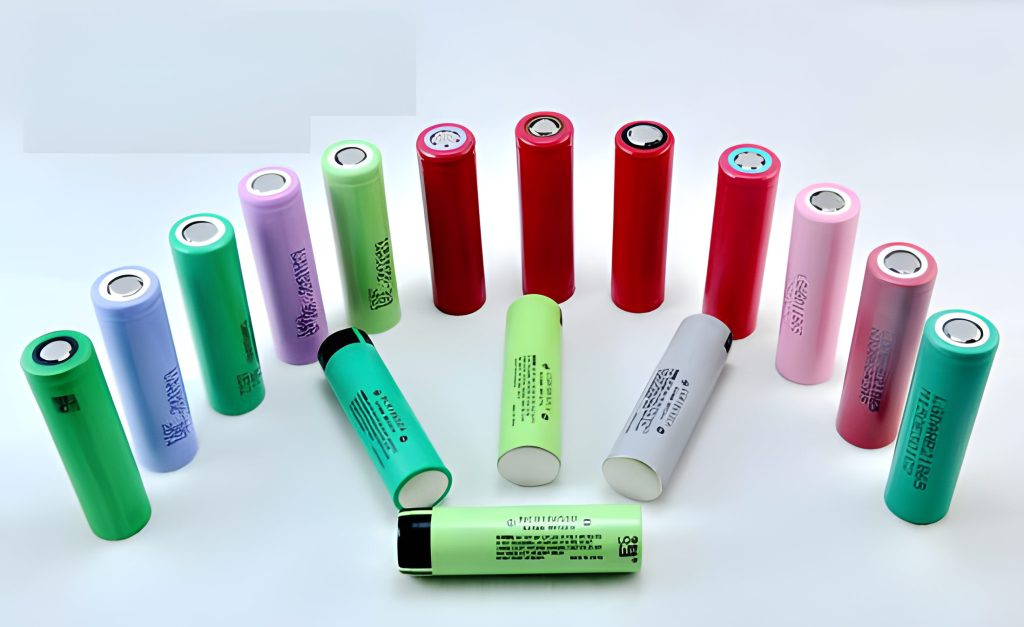
Define the release unit before selecting an instrument
A delivery, a supplier batch and an internal stock lot are not necessarily the same population. One delivery can contain several manufacturing batches, while one manufacturing batch can arrive over multiple shipments. Decide which grouping the inspection decision covers and how that grouping is maintained after cartons are opened. Otherwise, a good result on one tray can accidentally release unrelated stock that shared the same delivery note.
Record manufacturer and complete cell designation, supplier part number, purchase revision, quantity and received identifiers. If only carton-level identification is available, say so. Do not create the appearance of manufacturer serialization by printing internal labels that cannot be connected to an original mark. The buyer's objective is a defensible chain of identity from the supplied material to the assembly record, with explicit limits where the source provides less detail.
Agree what each measurement is expected to reveal
OCV is a voltage observation with a defined rest and environmental condition. Resistance is a method-dependent response to an electrical stimulus. Capacity measures delivered charge under a particular charge, discharge and endpoint procedure. None of these independently establishes the full history or authenticity of a cell. Receiving inspection works better when the plan states which question each measurement answers and which decisions require supplier evidence beyond an instrument reading.
A short screening sequence should not be sold internally as a full qualification test. It can identify discrepancies, establish a controlled baseline and support an agreed sampling decision. Finished-pack thermal behavior, transport documentation, lifetime and equipment compatibility require other evidence. This scope prevents a receiving team from inheriting promises that its method was never designed to support. It also helps purchasing compare inspection quotations that include very different amounts of work.
| Evidence | Record | Do not infer automatically |
|---|---|---|
| Identity | Manufacturer, model, lot and source documents | Authenticity from appearance alone |
| OCV | Voltage, rest history and temperature | Exact state of charge from one generic curve |
| ACIR or DCIR | Method, timing or frequency and fixture | Capacity or life from one number |
| Capacity | Procedure, endpoint and sample identity | Every cell passed when only a sample was tested |
| Disposition | Release, hold or reject with approver | Missing records mean acceptance |
Make ACIR and DCIR comparisons method-compatible
The Tektronix application note describes a DCIR measurement from the change in voltage divided by the change in current, with measurement timing defined around a load step. It distinguishes that response from AC internal-resistance methods. For procurement, the important consequence is that a resistance value without its method is incomplete. Ask whether the quoted figure is AC impedance at a stated frequency or a pulse-based DC measurement, and obtain the relevant procedure.
As a purely illustrative calculation, a voltage difference of 0.085 V divided by a current difference of 1.5 A gives approximately 0.0567 ohm, or 56.7 milliohms. These hypothetical inputs are not Jetray measurements, an acceptance threshold or permission to apply that load to an unknown cell. Pulse magnitude, duration, sampling instant, state of charge and temperature must be selected by the responsible test team within the approved product limits.
Check the fixture before interpreting a distribution
A receiving fixture is part of the measurement system. Contact condition, positioning, leads and sense connections can contribute variation. Describe where current is applied and voltage is sensed, how the cell is located and how the instrument is checked. If readings change substantially when a cell is repositioned, investigate repeatability before declaring that the lot has poor consistency. Keep the original result and the reason for any repeat.
A useful repeatability exercise includes more than one operator or fixture position when those vary in normal work. Use an approved reference or checking method suitable for the instrument; do not assume a general resistor represents every aspect of a battery measurement. The plan should state what happens if the check fails, including which previously measured material must be held. This is a measurement-control issue rather than a new electrical limit for the cells.
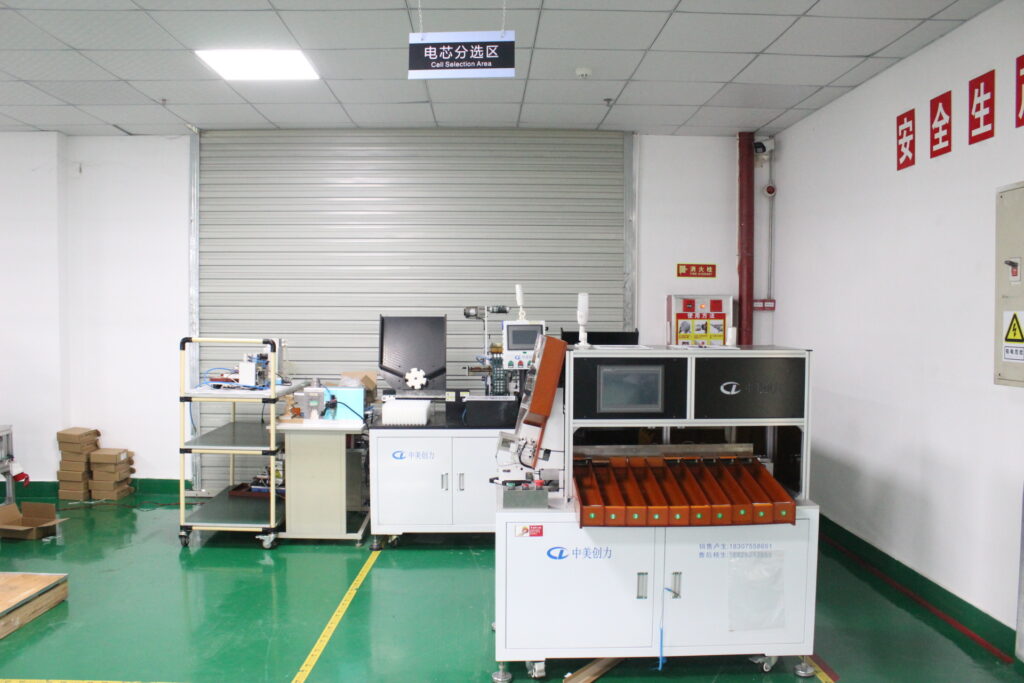
Control conditioning and capacity sampling
Condition comparisons so they do not mainly measure different recent histories. Record when cells last experienced charging, discharge or a significant temperature transition and use the agreed rest and preparation procedure. Keysight's discussion of self-discharge measurement explains why post-charge redistribution and temperature can influence small voltage observations. A stable-looking display after a brief pause does not by itself demonstrate that all cells are in an equivalent condition.
Capacity sampling needs an explicit selection rule, sample count, charge procedure, discharge current, endpoint and environment. Preserve individual values rather than only the average. A sample result cannot prove that every untested cell has the same capacity. If a sample fails, the reaction should already be agreed: additional assessment, a lot hold, supplier investigation or rejection under the purchasing agreement. Repeated sampling without a defined rule can turn a release decision into a search for a favorable subset.
Interpret spread and outliers without inventing universal grades
Sorting can reveal a distribution, but the label Grade A has little technical value unless its criteria are defined. Ask the supplier what measurements, conditions and limits support any grade statement. A narrow OCV band may simply reflect controlled shipping charge state; it does not establish a narrow capacity distribution. Likewise, low resistance alone does not establish a permitted high-current application. Keep the meaning of each grade tied to the contracted method.
For a planning exercise, suppose two instruments show different lot averages. Before attributing that difference to the cells, compare method, calibration status, fixture and environmental condition using identified samples. Do not merge the two data columns into one apparent population without resolving the offset. A defensible report can state that results are not yet comparable. That is more useful than assigning cells to bins whose numerical boundaries have no shared measurement basis.
Preserve the link from inspection to pack assembly
A spreadsheet can be accurate at receiving and still lose its value when loose material is transferred into unmarked containers. Define how approved stock is moved, divided and issued. Maintain the relationship between the receiving lot, inspection report and assembly production order. If material from several accepted lots can be used together, make that an approved manufacturing rule rather than an accidental consequence of replenishing a tray.
Retain the first result, reinspection result and disposition rather than overwriting a single pass column. Record who approved an exception and whether it applies to a specific quantity or future orders. Supplier correspondence should identify the same lot and specification revision as the inspection report. These details reduce ambiguity when a later pack issue has to be traced backward, without pretending that traceability by itself prevents every defect.
- Confirm identity, lot boundaries and current controlled specifications.
- Inspect packaging and physical condition under the approved handling procedure.
- Check the instrument and fixture using the documented measurement-control plan.
- Perform agreed voltage/resistance screening with comparable conditions.
- Run capacity or other sampling only under the defined method and selection rule.
- Resolve holds and exceptions before material enters the released stock flow.
- Carry lot and inspection identifiers into the manufacturing issue record.
Apply the plan to Jetray catalogue inquiries
Jetray's catalogue includes a 4680 15 Ah LiFePO4 reference, a CBAK 32140 15 Ah LiFePO4 reference and a smaller 14500 lithium-ion reference. They do not share one universal receiving limit, chemistry curve or assembly procedure. A listing also does not establish that Jetray manufactures a third-party brand's cell. Request the actual supplied model, traceability level, current datasheet and evidence available for the order under discussion.
A strong RFQ names the information needed for release: lot documents, proposed inspection method, sampling responsibilities, discrepancy response and change notification. Ask which tests are offered as routine order evidence and which require a separate agreement. The goal is not to add the largest possible number of tests, but to make the few that control the purchasing decision repeatable, traceable and meaningful for the intended engineered pack.
Frequently asked questions
Can equal OCV prove equal capacity?
No. OCV and capacity describe different observations. Capacity comparison requires an appropriate controlled procedure and cannot be replaced by matching a voltage reading.
May we compare an ACIR result directly with a DCIR limit?
Only if a competent, documented relationship has been established for the actual product and conditions. A shared milliohm unit does not make the methods equivalent.
What is the minimum useful traceability record?
At least preserve the supplied identity and actual lot level, associated inspection method/results and material disposition through stock issue. The exact requirement depends on the product and purchasing agreement; do not claim finer traceability than the source supports.
Sources & further reading
- Tektronix/Keithley: Measuring Battery DCIR application note ↗
- Keysight: lithium-ion self-discharge measurement and conditioning ↗
AI-assisted procurement and measurement education. The release workflow is an editorial proposal; no Jetray grading process, measurement distribution, authentication result or cell-specific acceptance threshold is asserted.
Prepared for the cylindrical battery cells collection. General engineering guidance does not replace a model-specific datasheet or application validation. Source review: 5 November 2026.